
-
 At the beginning of the new year, the Shandong Branch of the Export-Import Bank of China issued a letter of guarantee for the advance payment of domestic and foreign ships for Qingdao Beihai Shipbuilding Co., Ltd. to support enterprises to undertake domestic and foreign ship orders. Taking advantage of the ship financing brand, the bank efficiently completed the whole process of letter of guarantee application, review and issuance in view of the capital-intensive and long cycle characteristics of the shipbuilding industry, and ensured the smooth start of ship construction with policy financial forces to help the high-quality development of the shipbuilding industry.
 -
In 2025, the international market share of the three major indicators of China's shipbuilding industry (shipbuilding completion, new orders received, and hand-held orders) will rank first in the world, with new green ship orders accounting for 69.2 per cent. The global shipbuilding market is expected to remain stable in 2026, and China's shipbuilding completion will exceed 60 million dwt. At the same time, the article points out that the industry is facing geopolitical, supply chain security and other challenges, and puts forward some development suggestions in 2026, such as focusing on "ship protection", exploring the green intelligent ship market and cultivating new growth points of marine economy.
-
The Iranian Ministry of Foreign Affairs issued a statement on March 22, setting out its principles of passage in the Strait of Hormuz. The statement emphasized that the Strait has not been blocked, but Iran has taken necessary security measures in response to the US-Israeli military aggression. The statement clearly distinguishes between the conditions of passage for hostile and non-hostile vessels, stating that only non-hostile vessels that comply with Iran's security regulations will be allowed safe passage. At the same time, the Iranian foreign minister stressed that the prerequisite for restoring regional stability is to stop military threats and actions against Iran. The move is a direct response to US President Trump's previous threatening remarks.
-
China Tourism Group and China Shipbuilding Group signed a memorandum of cooperation to jointly promote the mass construction and series operation of large cruise ships. The two sides will integrate the soft power of China Travel Service Group's cultural tourism operation and the hard power of China Shipping Group's equipment manufacturing, so as to realize the whole chain from market demand, ship design to construction and operation. This move marks that China's cruise industry has officially entered a new stage with independent innovation as the core. It aims to promote the high-quality development of the local cruise industry chain and enhance China's voice in the global high-end ship market.
-
 The customs clearance supervision mode of "Bay Port Link" multimodal transport in Guigang City, Guangxi was officially launched, marking that the inland river port of Xijiang has entered a new stage of "one single system" through the whole process of intermodal transport. This model realizes "one declaration, one order to the end" through the "single window" of international trade, breaks the traditional barriers to customs clearance, greatly reduces customs clearance time and logistics costs, effectively connects coastal ports and inland hinterland, optimizes the port business environment, and injects new impetus into the development of foreign trade in the Xijiang River Basin.
 -
On March 19, the China International Sustainable Transportation Innovation and Knowledge Center and the Asian Infrastructure Investment Bank jointly held a seminar on logistics development in Central Asia in Beijing and released the "Central Asia Logistics Research Report". The report systematically evaluates the logistics development status of the four Central Asian countries, and puts forward the regional logistics network layout plan of "one core corridor and three key directions" and the list of the first batch of key projects. The conference brought together representatives of transportation departments, international organizations and enterprises in Central Asia to discuss cooperation opportunities, promote regional logistics interconnection, and provide financial and intellectual support for high-quality infrastructure projects.
-
Shanghai Mayor Gong Zheng met with the head of the Baltic International Shipping Association, and the two sides exchanged views on deepening cooperation. Gong Zheng said that Shanghai is focusing on improving the resource allocation capacity of the international shipping center, developing high-end shipping service industry, and promoting the digital, intelligent and green transformation of shipping. He hopes that the association will help Shanghai improve its shipping service level, launch more "Shanghai contracts" and "Shanghai rules", and support Shanghai's participation in international shipping governance. The association affirmed Shanghai's status as an international shipping center and expressed that it will continue to support its construction and jointly promote the digitalization of aviation trade and the development of green shipping.
-
Shenzhen Port Logistics Group and Hainan Logistics Group signed a strategic cooperation agreement to jointly promote the high-quality development of Qiongshen logistics integration. The two sides will open up cross-border logistics channels to reduce regional costs, build a new energy vehicle supply chain to the sea, and connect the western land and sea new channels. This cooperation is an important measure for Shenzhen Port Group to implement the construction of the "five major channels" and seize the opportunity of Hainan Free Trade Port, aiming to improve the layout of the national logistics network and serve the new development pattern.
-
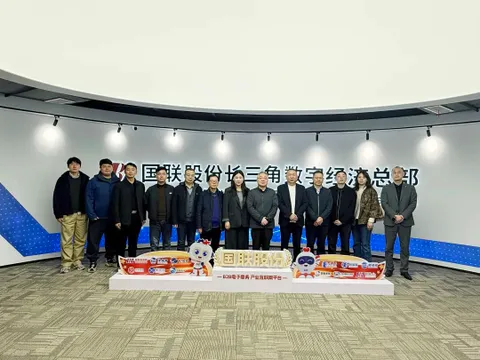 On March 11, Tan Wei, Deputy Secretary of the Party Committee and Director of the Wuhan Optics Valley Central City Construction Service Center, and his delegation visited the IBI Yangtze River Delta Digital Economy Headquarters, where they were warmly received by Wang Yu, CEO of Xineng Duoduo, and others. The two sides engaged in in-depth discussions on topics such as the intelligent computing industry chain, digital supply chain, and industrial digitalization. The visiting delegation first toured the IBI Yangtze River Delta Digital Economy Exhibition Hall, gaining detailed insights into the operational models of various Duoduo platforms under IBI, cross-border operational strategies of industrial belts, and the technical applications and practical achievements of IBI Cloud. Wuhan East Lake High-tech Development Zone (referred to as "Optics Valley") is one of China's first national high-tech zones and is also in Hubei.
 -
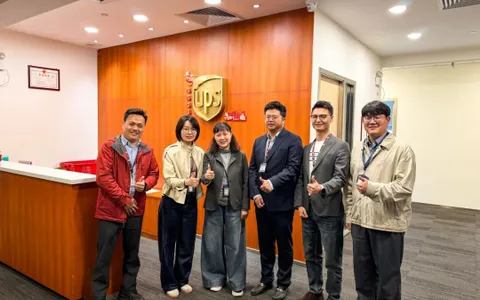 Recently, UnionLink Cross-Border Intelligent Transport signed a strategic cooperation agreement with UPS (United Parcel Service). Zhou Jianming, Deputy General Manager of UnionLink Cross-Border Intelligent Transport, and Wu Yushan, Director of Supply Chain Business Development at UPS, represented both parties in completing the signing. UnionLink Cross-Border Intelligent Transport's General Manager Zeng Tianwang, Operations Director Jiang Xianbin, UPS Asia-Pacific Project Customer Sales Director Wei Chao, and Business Development Department Key Account Manager Su Jiannan, along with other representatives from both sides, attended the signing ceremony. The two parties engaged in in-depth discussions on topics such as the construction of cross-border supply chain service systems and empowerment paths for vertical industrial belts, jointly outlining a new blueprint for cross-border logistics cooperation characterized by complementary advantages and industrial synergy.
 -
Shenzhen Port Logistics Group and Hainan Provincial Logistics Group have signed a strategic cooperation agreement to jointly promote high-quality integrated logistics development between Hainan and Shenzhen. The two sides will integrate their respective advantages in port and shipping resources, logistics network and operational experience, focus on opening up the Qiongshen cross-border logistics channel to reduce regional costs, build an international supply chain for new energy vehicles to go to sea, and promote the deep connection between the logistics network and the new land and sea channel in the west. This cooperation aims to empower the industrial upgrading of the two places and help build a new development pattern.
-
The Chief Executive of the Hong Kong Special Administrative Region Li Jiachao announced that he is formulating the first "Hong Kong Five-Year Plan" at full speed, aiming to actively connect with the national "15th Five-Year Plan" and provide clear guidance for Hong Kong's social, economic and people's livelihood development. The plan emphasizes taking advantage of Hong Kong's unique advantages of "relying on the motherland and connecting with the world", giving full play to its role as a domestic and international double-cycle "super contact" and "super value-added person", deepening Guangdong-Hong Kong-Macau Greater Bay Area cooperation, expanding global economic and trade networks, and promoting the leapfrog development of emerging industries, turning national opportunities into practical results of high-quality development and improving people's livelihood.
-
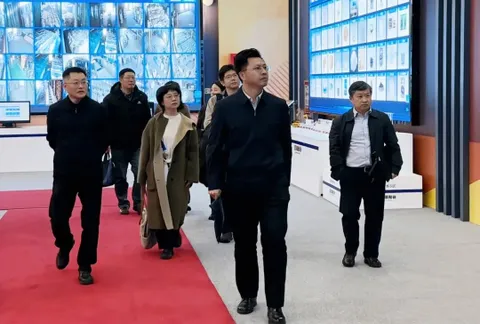 On March 13, the Director of the Department of Foreign Investment and Economic Cooperation of the Ministry of Commerce, Zhao Chunfeng, and his delegation conducted a study on the "Xianfeng Qihang" comprehensive service for going abroad at Zhongguancun Fengtai Park. The research team first visited IBI, where they were warmly received by IBI's director, senior vice president, and board secretary Pan Yong, among other leaders. The delegation visited the IBI digital economy exhibition hall, and both parties exchanged views on cross-border industry-related content, gaining an in-depth understanding of IBI's practices in the field of cross-border industries. Pan Yong, using cases, data, and application scenarios displayed in the exhibition hall, focused on introducing the company's core layout in cross-border industrial zones, digital service models, and cross-border activities.
 -
The US-Israeli military strikes caused Iran to block the Strait of Hormuz, triggering a violent shock in international oil prices, which once approached US $120 per barrel. Although measures such as the release of strategic reserves by various countries have temporarily eased market panic, the continued blockade of the Strait, as a necessary channel for nearly 1/5 of the world's seaborne oil, will pose a serious threat to the global economy. The article analyzes the reasons why the current situation has not yet evolved into a full-scale oil crisis, and points out that the future market trend is highly dependent on the development of war and the status of navigation in the strait, highlighting the urgency of traditional energy security and the adjustment of the global energy pattern.
-
As the vice chairman of the Asia-Pacific region of the World Customs Organization, Hong Kong Customs hosted the first large-scale regional conference on smart customs from March 11 to 13. The conference brought together more than 200 representatives from around the world to discuss the four core pillars of intelligent data-driven and single-window trade, and to showcase innovative application cases such as artificial intelligence and blockchain. The conference aims to harmonize digital standards, strengthen public-private cooperation, and promote the digital transformation of customs operations to build a more efficient, secure and interconnected global trading system.